Abstract
This article explores how project management (PM) practices serve as a critical enabler for embedding customer-centricity into organizational strategies. It discusses the role of PM tools, frameworks, methodologies, and AI technologies in driving customer satisfaction, fostering innovation, and achieving scalable growth. By integrating PM practices with customer-focused strategies, organizations can better align resources, improve operational efficiency, and deliver exceptional customer experiences.
Keywords
Customer-Centricity, Project Management, KaiBan, Business Continuity, Agile Methodologies, AI
Research Questions
How do project Management (PM) practices directly contribute to achieving customer-centricity within organizations? What is the intersection between effective project management practices and customer centricity, and how can its impact be measured? How do PM tools and frameworks translate into actionable strategies? How do emerging technologies enhance customer-centric project panagement? How do Agile Methodologies such as Scrum and Kanban support customer-centricity? What mechanism in the Agile framework contributes to increased customer value? What are some challenges of customer-centric project management, and how can they be circumvented?
Introduction
During my early days as an Event Planner, my business booked a high-profile wedding whose contracts ran in thousands and thousands of dollars. At this time, this wedding was our biggest event, and its high-profile nature meant more well-known event brands were bidding for the contract. As customary for me, I reached out to the bride after the wedding for feedback, and one piece of feedback she gave that stayed with me was that she booked us out of the several businesses because I was the only one who asked her what she envisioned for her big day, other businesses simply presented their offering. Meeting client expectations has always been a core part of the business’s project management practice, and understanding their vision is the most critical aspect of all (Parasuraman, Zeithaml, & Berry, 1988). As the lead project manager of the business, I always made sure not to leave any stone unturned in capturing this vision of the customer right from the initiation stage of every project, and in this particular situation, it paid off. Needless to say, I was able to build a great relationship with this bride that transcended the event, and she even wrote me a recommendation letter to Graduate school when I decided to pivot to corporate project management. This decision I made, the decision to ask and truly listen, landed me that life-changing contract, underscoring the importance of customer-centricity in project management.
Sheth, Sisodia, and Sharma define customer centricity as a strategy focused on treating each customer as an individual and providing them with precisely what they need, aiming to maximize both efficiency and effectiveness at the individual customer level (Sheth, Sisodia, & Sharma, 2000). According to the Project Management Body of Knowledge (PMBOK® Guide), project management is the application of knowledge, skills, tools, and techniques to project activities to meet the project requirements. To create value for the customer, their goals for every touchpoint must be defined, and business strategies must be personalized to meet these expectations successfully. This can be done by adopting effective project management practices.
In this paper, I argue that a strategic and integrated application of project management principles, informed by service-dominant logic and stakeholder theory, provides a robust framework for achieving genuine customer-centricity, moving beyond transactional approaches to foster long-term co-creation and organizational sustainability.
Organizations that successfully navigate today’s dynamic business world can predict changing customer needs and quickly adapt their value offering to ensure continuous customer satisfaction by centering the customer at every point of business decision-making. This is because value creation for the customer involves prioritizing their goals for every touch point and personalizing business strategies to successfully meet these goals. One way to achieve this is through a series of customer-driven temporary endeavors to achieve short-term goals that ultimately build up to longer-term ones: projects. The most effective project management practices are flexible, adaptable, and feedback-driven, making it possible for businesses to thrive where customer-centricity is concerned and aiding strategic transformation (Koskela & Howell, 2022). In this paper, I will thoroughly discuss how good project management practices, such as frameworks and methodologies, can help organizations achieve customer centricity and the intersection between project management and customer-centricity. I will also discuss the role of emerging technologies in customer-driven project management and how to properly maximize them, the limitations to effectively leverage project management practices in customer-centricity, and how to successfully circumvent them.
Foundational Theoretical Concepts
Service Dominant Logic (S-D Logic): The Service Dominant Logic theory (Vargo & Lusch, 2004) postulates that value is co-created by businesses and customers, underscoring the importance of customer-centered project management. The customer’s role in defining value is thoroughly emphasized, and so is the importance of relationship building in understanding and meeting their needs. Applying S-D logic to project management helps businesses shift focus from short-term planning to a more strategic approach in the actualization of organizational goals by actively engaging the customer throughout the project lifecycle to co-create valuable outcomes.
Stakeholder Theory: The Stakeholder Theory (Freeman, 1984) postulates that organizational success is largely dependent on its ability to meet stakeholders’ expectations by managing their interests and building relationships. At the heart of these stakeholders are the customers, and in the context of project management, the stakeholder theory highlights the importance of identifying, understanding, and thoroughly addressing customers’ needs in achieving project success and building long-term loyalty.
The Intersection of Project Management Practices and Customer-Centricity
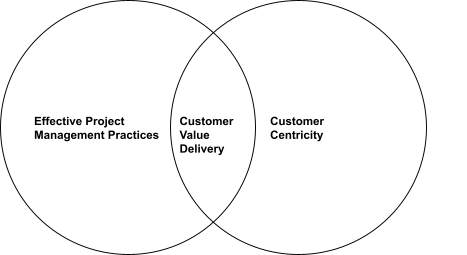
Figure 1: How Effective Project Management Practices and Customer Centricity Are connected
Customer centricity and project management are interlinked, with project management providing the framework for translating customer insight into result-driven strategies. Both involve strategic planning toward the actualization of long-term organizational goals by ensuring continuous alignment with customer needs through feedback and data-driven strategies. This alignment is achieved through a variety of project management practices, including stakeholder management, communication, and quality management plans, which play a crucial role in ensuring the customer’s needs are understood and addressed throughout the project lifecycle. Whether waterfall or agile, adopting a culture of data gathering and feedback is imperative for customer satisfaction, and adapting the right project management practices is a core part of successful business operations. Concepts such as Voice of the Customer (Griffin & Hausser, 1993), which entails gathering customer feedback to improve product or service offerings to deliver value, can be achieved by utilizing Scrum (Schwaber & Sutherland, 2020), an agile project management framework, during the sprint review. The sprint review is a Scrum event where “the Scrum Team presents the results of their work to key stakeholders and progress toward the product goal is discussed, and can be leveraged as adaptation tools by businesses seeking to achieve customer centricity. For example, a marketing department of a software development company can gather marketing campaign feedback at every stage of product release and utilize that feedback to ensure that the goals and expectations of the customers are being met through sprint reviews which can be in the form of customer listening strategies, such as surveys or questionnaires, designed around ensuring that this new product is resonating well with the customers, rather than wait till the end of the project. By leveraging the feedback gathered through the sprint review, the marketing team can iteratively deliver value to the customer by adapting the software to their expectation. Feedback gathering also provides insight into future trends, which helps organizations strategize as needed. In addition, customer journey mapping (Richardson, 2010), which is planning for every stage where the customer interacts with the organization and personalizes their experiences at every stage, is done through project management. Similarly, A beauty company can effectively map customer journeys and personalize the experience through project management. They can gather information about customer preferences through social listening to create requirements for a new lipstick they are developing, prioritize the lipstick finish (matte, gloss, satin), or even decide to create the lipstick in all finishes using the gathered data. They can create a timeline, allocate resources, and plan milestones toward the launch using the right project management tools. They can also decide the most effective marketing medium best suited for their target audience through effective stakeholder engagement and prioritization. If the lipstick is targeted toward Gen Z, they can decide to use TikTok, and Millennials can largely be reached via Instagram and Facebook. Project management tools help manage these campaigns, tracking their performance and making adjustments based on real-time data. In addition, the absence of a good risk management plan can deprive the organization of contingency planning, and a risk occurrence may affect the launch timeline. Effective project management helps circumvent this by putting mitigation plans into place for high-impact, high-probability risks. By leveraging effective project management practices at each stage of customer mapping, the organization can successfully launch this lipstick and achieve its goals for the launch.
Continuous Improvement, an important part of business operations, can also be achieved through customer-driven project management. I especially love the Kaizen Lean principle (Imai, 1986), which stipulates incrementally making small changes to processes until the intended goal is achieved. Leveraging Kaizen can help organizations achieve customer-centricity by constantly gathering feedback to ensure expectations are being met, and also utilizing this feedback to deliver value to the customer. Closely related to Lean is its Agile brother, Kanban (Cooper & Edgett, 2008), and I have strongly considered how both can be utilized together to adapt quickly and deliver value. KaiBan seeks to limit work in progress by introducing a Kaizen component after the “Done” stage, where results are re-evaluated to ensure they meet planned goals. A “KaiBan” board, for example, will have a “To-Do”, “Doing”, “Review”, “Done”, and “Adapt” stages instead of the initial four stages only.
Figure 2: Difference between KanBan board and my postulated KaiBan board

A software development company hoping to roll out an updated version of its Learning Management System application can benefit from KaiBan by gathering feedback through surveys, designing new features that meet customer expectations by using Kanban and needs, and leveraging Kaizen to constantly adapt those features with changing customer requirements. Recording lessons learned from every stage of the KaiBan board can also be used to improve operational efficiency as the data gathered from what went well and what did not can serve as a reference for future sprints, phases, and projects. Customer-driven project management is a tried and tested way to ensure customer needs are being met and also a way to achieve business growth through continuous learning and improvement, making Agile a great approach (Highsmith, 2009).
In today’s dynamic business world, centering on the customer’s needs and market preferences is ever-changing, and integrating the right project management practice in business operations to achieve customer-centricity is essential and, therefore, must be prioritized in strategic planning. This is because organizations seeking to achieve long-term business growth and, ultimately, continuity must center the customer and value delivery at the heart of their operation. Customer-centric project management aids continuous value delivery, helping businesses circumvent competition and ultimately achieve business growth.
The Role of Technology in Customer-Centric Project Management
Technology has changed how business is conducted over time, and project management is not left out of this revolution. With several innovative tools and software available for project execution, it has become easier than before to center the customer at every point of business decision-making. Scheduling tools such as Asana, Wrike, and Monday.com make it easy to initiate, plan, execute, monitor, control, and close project work with their automation and interactive features. They also include data visualization features such as dashboards for improved value delivery and strategic planning. For example, Project managers can track project progress against customer milestones through data visualization dashboards and see when projects are veering off track, which helps them take corrective actions. Data visualization tools provide insights through raw data that can be analyzed toward a deeper understanding of trends, helping the organization deliver value and also plan toward long-term customer retention goals. Scheduling tools can also be integrated with Customer Relationship Management (CRM) tools (Buttle & Maklan, 2019), which provide live metrics from customer interaction directly within the project dashboard, making it easy to strategically plan towards customer satisfaction.
Project collaboration tools such as Slack, Zoom, and Microsoft Teams help align project teams towards deliverable execution and shared goals, especially in today’s global business world that relies heavily on remote work. By ensuring effective and efficient communication among team members regardless of location, project collaboration tools help the team work together to deliver value to the customer. A project manager can use Slack to share daily updates with teams, ensuring continuous synergy toward project goals actualization, and also utilize video conferencing tools like Zoom to conduct virtual data gathering exercises, such as surveys (Fowler, 2014) and Focus Group (Morgan, 1997) discussions with the customer, ensuring that their needs are properly captured towards value delivery. Remote work also helps organizations utilize a vast pool of talent, making it possible to benefit from diverse perspectives during project strategy planning and execution, which is a sure way to ensure that the expectations of customers in a global market are properly captured.
The advent of AI has made customer-centric project management even more attainable (Kaplan & Haenlein, 2019). AI can analyze large data set from customer feedback, social media comments, and even queries to create insights that can accurately identify emerging trends and needs, making strategic planning toward customer satisfaction easier and more effective. In addition, the insights gathered can be used to create customized experiences and personalization (Pine & Gilmore, 1999), fostering a sense of connection that can significantly improve brand loyalty. Automation of tasks made possible by AI also leaves more time to focus on strategy planning and execution, and that includes how to properly center the customer in business operations. In managing risks, a critical component of business operations, AI can predict possible issues through algorithms and provide solutions that can help mitigate those issues, contributing to operational efficiency.
In conclusion, technology plays an important role in customer-centric project management; from workflow improvement, collaboration excellence, and detailed data analysis to effective strategy planning, technology helps businesses to center customers, which aids value delivery, ultimately fostering long-term loyalty.
How to Measure the Success of Customer-Centric Projects Effectively
To acheive continuous value delivery while staying innovative enough for business continuity, adopting a result-driven approach toward measuring the success of customer-centric projects is key. This is to ensure that successful projects are given priority so that their outcome can be fully maximized. Some ways to ensure the success of customer-driven projects include Portfolio management (Cooper, Edgett, & Kleinschmidt, 2001), OKR tracking (Doerr, 2019), Agile (Highsmith, 2009), and Balanced Scorecards (Kaplan & Norton, 1992).
Portfolio Management: Portfolio management (PMI, 2021) is the discipline of strategically selecting, prioritizing, managing, and controlling a collection of projects, programs, and other related work to achieve specific organizational strategic objectives and maximize business value. Portfolio management helps maximize the benefits of projects undertaken by organizations through analyzing market trends and customer preferences, ensuring projects with the highest potential impact are prioritized. By grouping similar projects and programs, an organization can prioritize the ones that align the most with the customers’ needs and deliver the most value to them. This is done by looking at all projects via a holistic lens. Portfolio management also makes it easier to predict changing customer requirements by leveraging customer research, customer feedback, and competitive intelligence. These insights can be used to carry out scenario planning, helping to manage risks by ensuring that different possibilities of changing customer needs are predicted and accounted for. This also helps to drive innovation through the creation of products or value offerings to meet those changing needs. Portfolio management also helps put the right key performance indicators and metrics into place to systematically measure the success of customer-driven projects to ensure Return on investment (ROI), driving profitability through data-driven decision making. KPIs such as Net Promoter Score (NPS) (Reichheld 2023), churn rate, and customer retention rate can be leveraged toward predicting market changes and strategizing effectively to circumvent them.
Objective and Key Results: OKRs help organizations to strategically plan and achieve success from customer-driven projects by establishing benchmarks to measure project impact toward the achievement of organizational goals (Doerr, 2018). Objectives are qualitative goals that are tied to customer needs and delivering value to them, and results are measurable benchmarks to ensure the achievement of those objectives. Customer-driven objectives include customer acquisition, customer retention and loyalty, customer engagement, customer satisfaction (Oliver, 1997), and customer value, and by putting measures in place to ensure organizational strategies cater to these objectives, organizations can innovate effectively and achieve business continuity. OKRs are implemented organization-wide and ensure synergy across different departments, ensuring that every component of this business sees how their work measures up towards the achievement of customer success. To maximize the use of OKRs, objectives must be customer-driven, and SMART results must be set (Drucker, 1954). This is to ensure accountability, transparency, and a focus on tangible results that benefit both the customer and the organization. It is, however, important to note that the successful implementation of OKRs is dependent on regular reviews and cadence with regular check-ins to measure progress toward the achievement of end-of-cycle requirements, which leads me to my next point: Agility.
Agile: Agile helps ensure that an organization’s service or product offerings deliver value to their customer through effective requirement gathering, feedback collection, and an iterative approach toward value delivery (Highsmith, 2009). Agile centers the customer at every point of the project management process and, as such, makes it easier to predict their needs and evolving expectations. With agile, organizations can break down project work into small increments and can thoroughly monitor those increments to ensure they successfully fulfill a requirement. In addition, the emphasis on collaboration in the agile methodology makes sure that project teams and customers are working hand-in-hand with a synergy that makes value delivery seamless. Through regular reviews, organizations are not only delivering but also managing risks, making sure that resources are being effectively utilized. Meeting customer expectations also helps build brand loyalty, an important requirement for business continuity.
Balanced Scorecards: Balanced scorecards offer a strategic overlay, ensuring a holistic view of different objectives and the ways to measure their performance toward the achievement of organizational goals (Kaplan & Norton, 1992). By measuring different aspects of business execution, such as financial outcomes influenced by customer loyalty and value, customer satisfaction (Oliver 1993), internal processes that drive the achievement of customer-driven goals, and learning and growth in understanding the customers better to serve them more efficiently, organizations can align their strategy to make them more customer-centered, helping them to deliver value, circumvent competition and achieve business continuity.
Challenges with Customer-driven Project Management Practices
Scaling Personalization Without Compromising Efficiency: The delivery of personalized product and service offerings is an important part of customer-centered project management (Pine & Gilmore, 1999), but personalization at scale can be resource-intensive. To ensure that value is being delivered to the customers, organizations have to put measures in place to gather requirements from a vast range of customer groupings, and this requires adequate resources. If not properly done, requirements gathering for customer-driven project management will not be as efficient, and this could be a challenge if the business has a diverse customer base. A sure way to balance personalization with efficiency during customer-driven project management is through customer segmentation (Kotler & Armstrong, 2010). By segmenting customers based on preferences and behaviors, interactions, products, and services can be personalized without overburdening resources. Tools like AI, especially, make this easy as it can leverage customer historical data to provide insights that can be used to properly segment customers and ensure that value is provided to them by analyzing their journey and behavior. Customer segmentation helps customer-centered project management to prioritize effort and allocate resources effectively.
Balancing Profitability and Customer Expectations: Still on the topic of resource management, ensuring Return on Investment (ROI) on customer-driven projects while meeting customer expectations may be a challenge. This is because scope creep, which can affect resource allocation, may occur from trying to meet every customer requirement, prompting the need to invest more resources and increase the initial budget. This, in turn, makes it hard to ensure profitability. To circumvent this, a combination of project change management processes and tracking Customer Lifetime Value (CLTV) (Kumar, 2018) will come in handy. A change control board, according to the PMBOK Guide (PMI, 2021), is a formally constituted group responsible for reviewing, evaluating, approving, deferring, or rejecting changes to the project, and for recording and communicating such decisions. Putting a change control board in place helps keep projects within the three constraints and helps to effectively manage the budget towards balancing meeting customer expectations with profitability. Closely monitoring Customer Lifetime Value (CLTV) also helps businesses to strategically plan towards financial goals, through analyzing short and long-term perspectives and investing based on the gathered insights. This holistic view ensures short-term project success and also supports long-term organizational goals.
Maintaining Consistency Across Teams and Channels: With different teams working together to ensure customer centricity in project management, it can be difficult to maintain alignment which can disrupt customer experience, and this is why putting effective processes in place to govern project execution is an important ingredient for organizations seeking to achieve synergy within teams when it comes to customer-driven project management (PMI, 2021). This helps to maintain a consistent and unified experience for the customer and keeps haphazardness at bay.
Regular cross-functional meetings also help to share real-time customer insights across teams and departments, keeping everyone updated on current and evolving customer needs. Like most project management practices, customer-centered project management (PMI, 2017) is driven by effective collaboration, and this underscores the importance of consistency across teams and channels.
Conclusion
Customer-centered project management is an integral requirement for business growth and continuity, and organizations that seek to achieve strategic goals must leverage it to their advantage. Most project management frameworks and methodologies are feedback-driven, and the stakeholders are paramount (Freeman, 1984), with the customer being a high-impact, high-interest stakeholder. Centering the customer from the initiation to closure of projects is a sure way to create value, circumvent competition, and also be innovative, important ingredients for business continuity (Porter, 1985).
Emerging Technological tools, such as artificial intelligence, make it easier for organizations to achieve customer-centricity in project management by predicting changing needs through data insights (Kohavi, Tang & Xu, 2020). Additionally, through their integration with Project Management (PM) and Customer Relationship Management (CRM), they help teams collaborate more effectively (Chen & Popovich, 2003).
Acknowledgment
I used a GenAI tool solely to format the references in this paper, otherwise, all content in the paper was written entirely by me.
References
Buttle, F., & Maklan, S. (2019). Customer relationship management: Concepts and technologies (4th ed.). Routledge.
Chen, I. J., & Popovich, K. (2003). Understanding customer relationship management (CRM): People, process and technology. Business Process Management Journal, 9(5), 672–688.
Cooper, R. G., & Edgett, S. J. (2008). Idea-to-launch (Stage-Gate) model: An overview. Product Development Institute.
Cooper, R. G., Edgett, S. J., & Kleinschmidt, E. J. (2001). Portfolio management for new products. Perseus Books.
Doerr, J. (2018). Measure what matters: How Google, Bono, and the Gates Foundation rock the world with OKRs. Portfolio Penguin.
Doerr, J. (2019). Measure what matters. Penguin UK.
Drucker, P. F. (1954). The practice of management. Harper & Row.
Fowler, F. J., Jr. (2014). Survey research methods (5th ed.). SAGE Publications.
Freeman, R. E. (1984). Strategic management: A stakeholder approach. Pitman Publishing Inc.
Griffin, A., & Hauser, J. R. (1993). The voice of the customer. Marketing Science, 12(1), 1–27.
Highsmith, J. A. (2009). Agile project management: Creating innovative products (2nd ed.). Addison-Wesley Professional.
Imai, M. (1986). Kaizen: The key to Japan’s competitive success. McGraw-Hill.
Kaplan, A., & Haenlein, M. (2019). Siri, Siri in my hand, who’s the fairest in the land? On the interpretations, illustrations, and implications of artificial intelligence. Business Horizons, 62(1), 15–25.
Kaplan, R. S., & Norton, D. P. (1992). The balanced scorecard—Measures that drive performance. Harvard Business Review, 70(1), 71–79.
Kohavi, R., Tang, D., & Xu, Y. (2020). Trustworthy online controlled experiments: A practical guide. Cambridge University Press.
Koskela, L., & Howell, G. (2002). The underlying theory of project management is obsolete. PMI Research Conference 2002 Proceedings, 293–302.
Kotler, P., & Armstrong, G. (2010). Principles of marketing (13th ed.). Pearson Prentice Hall.
Kumar, V. (2018). Customer lifetime value: Concept, measurement, and applications. Now Publishers Inc.
Morgan, D. L. (1997). Focus groups as qualitative research (2nd ed.). SAGE Publications.
Oliver, R. L. (1993). Cognitive, affective, and attribute bases of the satisfaction response. Journal of Consumer Research, 20(3), 418–430.
Oliver, R. L. (1997). Satisfaction: A behavioral perspective on the consumer. McGraw-Hill.
Parasuraman, A., Zeithaml, V. A., & Berry, L. L. (1988). SERVQUAL: A multiple-item scale for measuring consumer perceptions of service quality. Journal of Retailing, 64(1), 12–40.
Pine, B. J., II, & Gilmore, J. H. (1999). The experience economy: Work is theatre & every business a stage. Harvard Business School Press.
PMI. (2021). A guide to the project management body of knowledge (PMBOK® Guide) (7th ed.). Project Management Institute.
Porter, M. E. (1985). Competitive advantage: Creating and sustaining superior performance. Free Press.
Project Management Institute. (2017). PMI Lexicon of Project Management Terms (Version 7.0).
Reichheld, F. F. (2003). The one number you need to grow. Harvard Business Review, 81(12), 46–55.
Richardson, A. (2010). Using customer journey maps to improve customer experience. Harvard Business Review, 88(11), 1–5.
Schwaber, K., & Sutherland, J. (2020). The Scrum guide. https://scrumguides.org/scrum-guide.html
Sheth, J. N., Sisodia, R. S., & Sharma, A. (2000). The antecedents and consequences of customer-centric marketing. Journal of the Academy of Marketing Science, 28(1), 55–66.
Vargo, S. L., & Lusch, R. F. (2004). Evolving to a new dominant logic for marketing. Journal of Marketing, 68(1), 1–17.


 Bisi Adeniji's Portfolio
Leave a reply to Uchechi Cancel reply